Similar Projects
See All Work
Footy Addicts has built a strong community around casual football by helping players find games, teammates and pitches across the UK. However, upon using the app I noticed the digital experience could be improved further to support the scale and social nature of the platform.
I decided to set myself a conceptual challenge, to improve usability, create a system that builds on the social drive to participate, and to create engaging retention features that could be implemented on the Footy Addicts app, to strengthen the desire to engage in grassroots football.
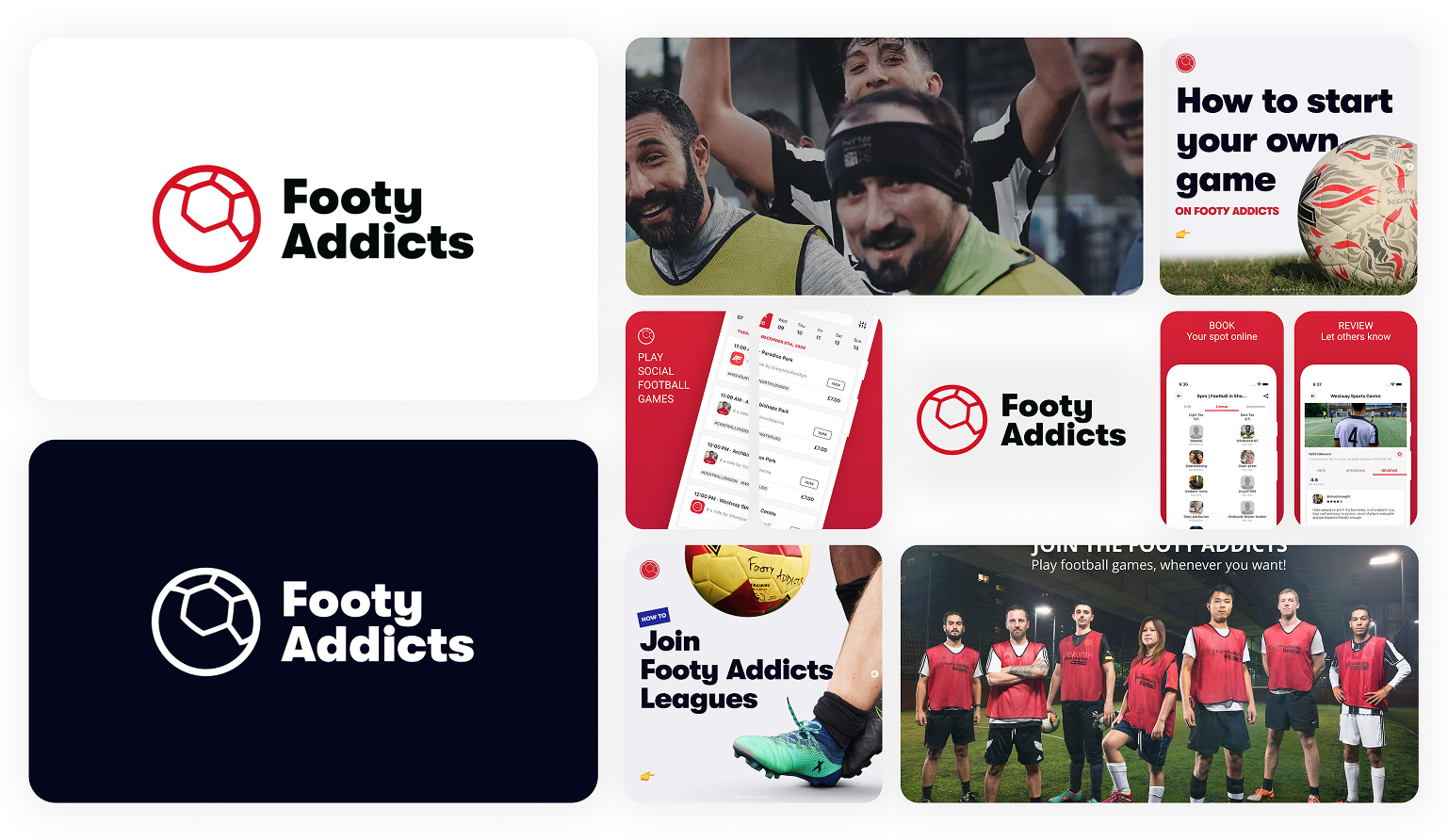
To get an initial understanding of the look and feel, I conducted a short branding audit. I found examples of how brand system elements were used across marketing assets and their current digital platforms to establish a starting point for the redesign.
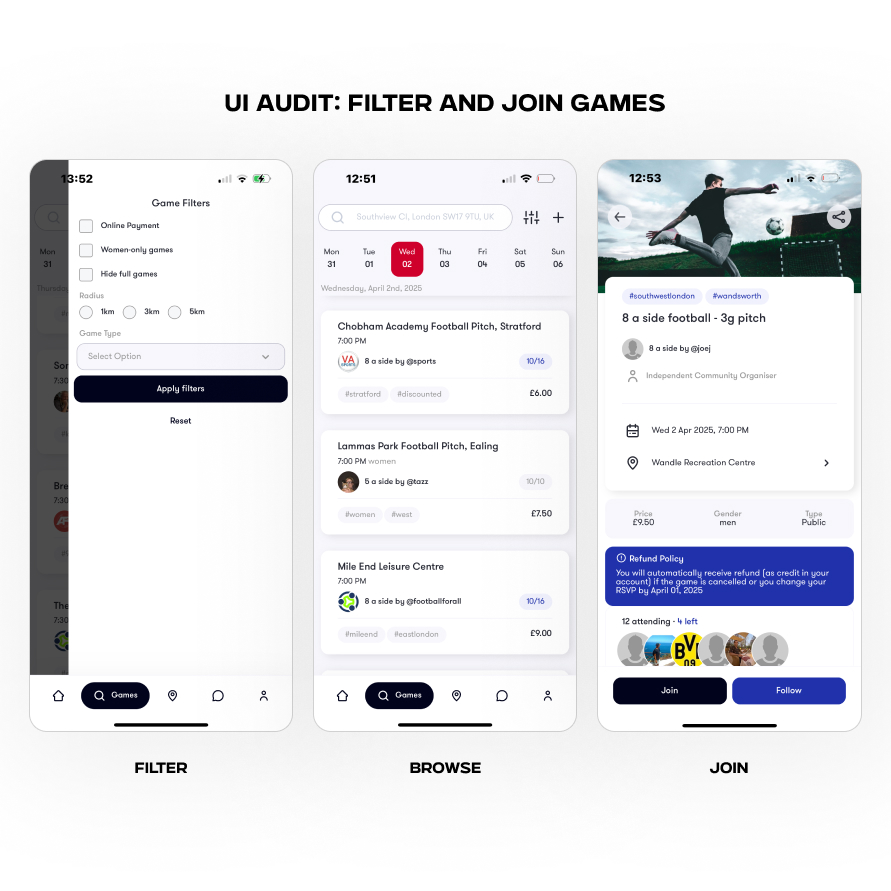
As the focal point of the project, the mobile app also needed an audit, not only to understand how the brand aesthetic shaped the platform but also to begin mapping key user journeys. Analysing the platform in this way helped me to conceptualise how I would implement new features to improve the app experience, and where they would fit within the current system.
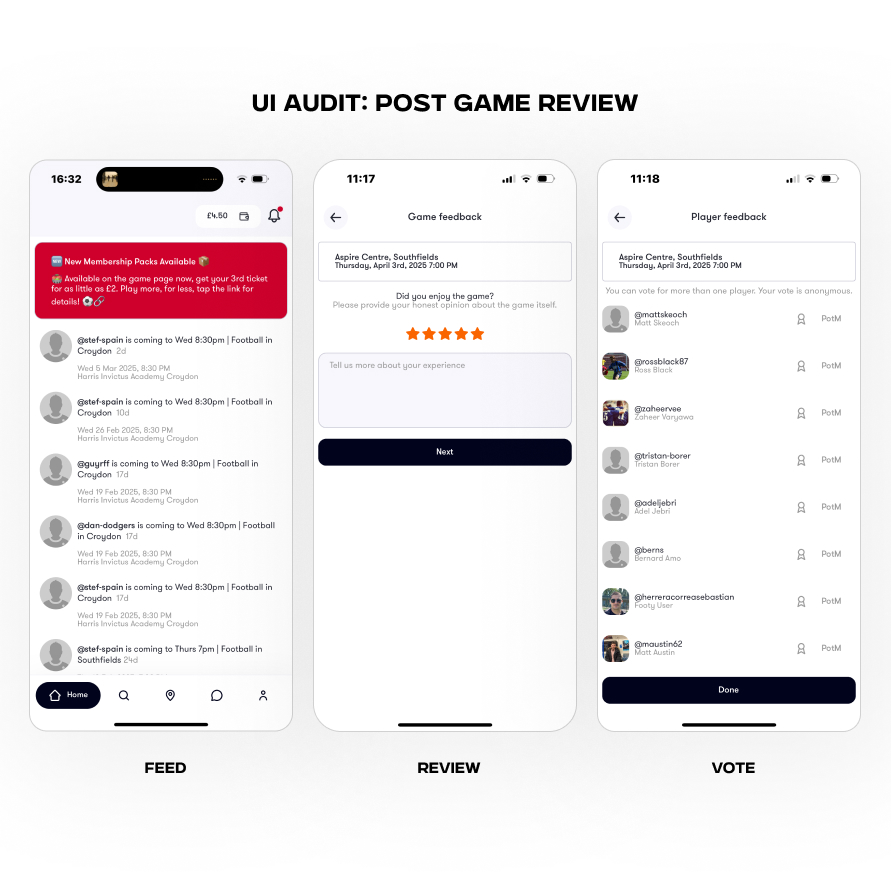
Having understood the mechanics, the next step was to conceptualise features that would boost the platform engagement. To do this, I had to delve into how users generally interact with social apps, and it's here that a gamification strategy comes into play.
Gamification theorises that there are distinct types of users and ways they interact with applications, and that understanding these differences enables you to create reward systems with predictable feedback loops to retain user engagement.
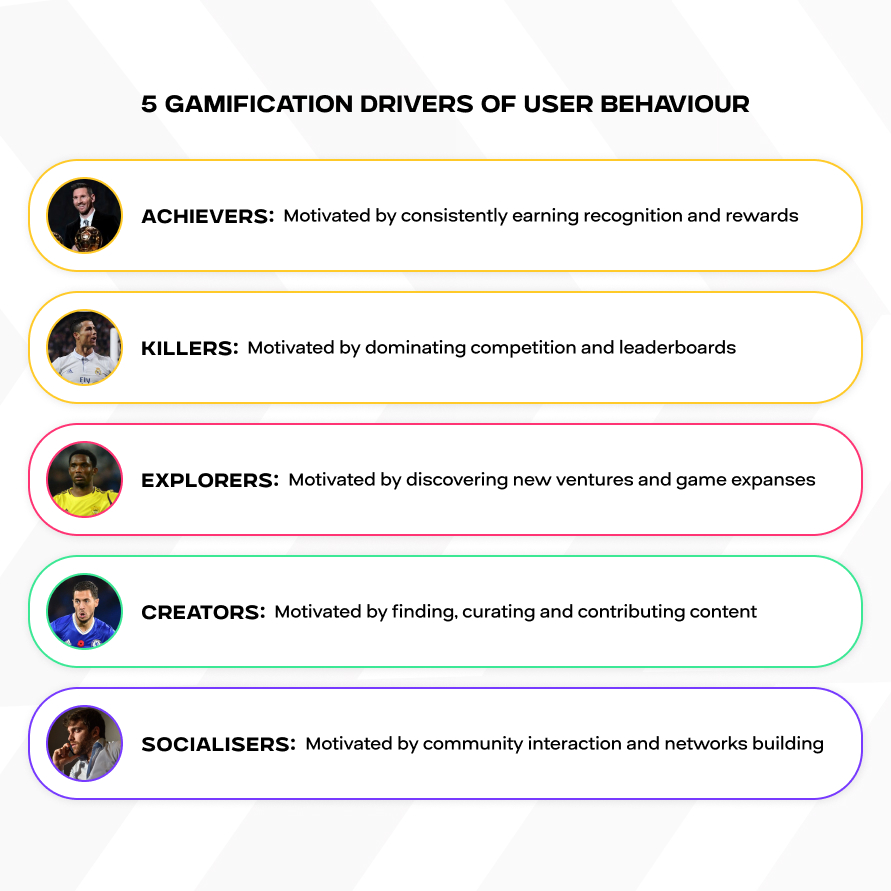
Through research, I identified five main user archetypes and their motivations for interacting with platforms, grounded in gamification theory. Acheivers, motivated by earning rewards and recognition, Killers, motivated by competition and dominating leaderboards, Explorers, motivated by discovering new ventures and game expanses, Creators and Socialisers, who are motivated by curating content and building platform relationships respectively.
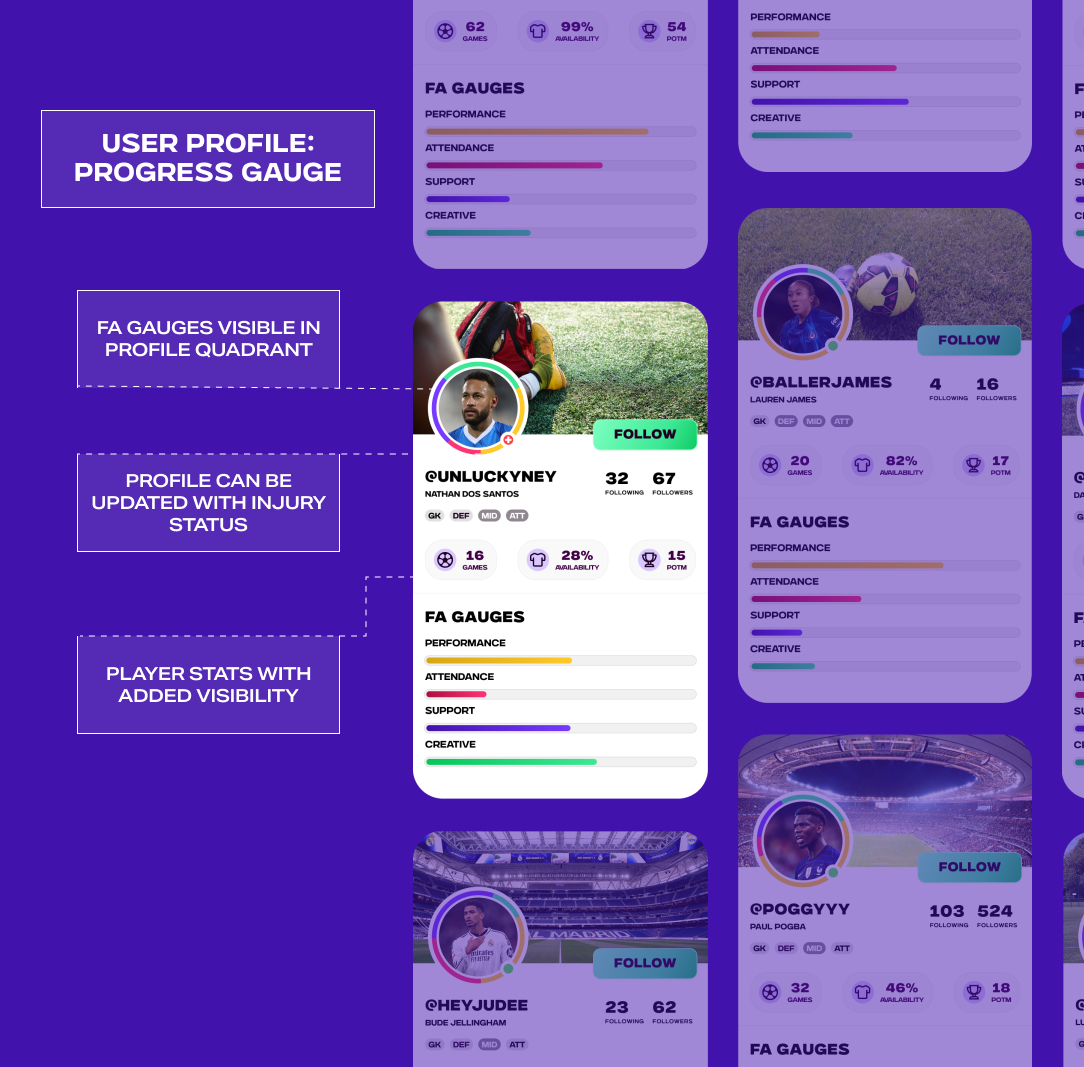
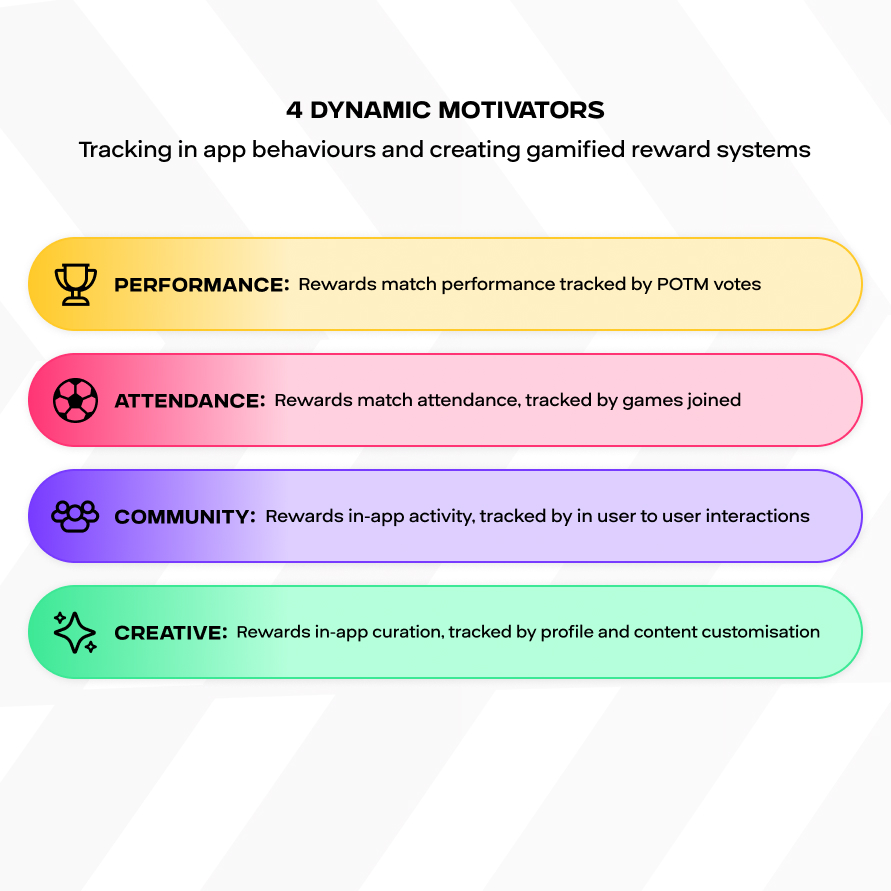
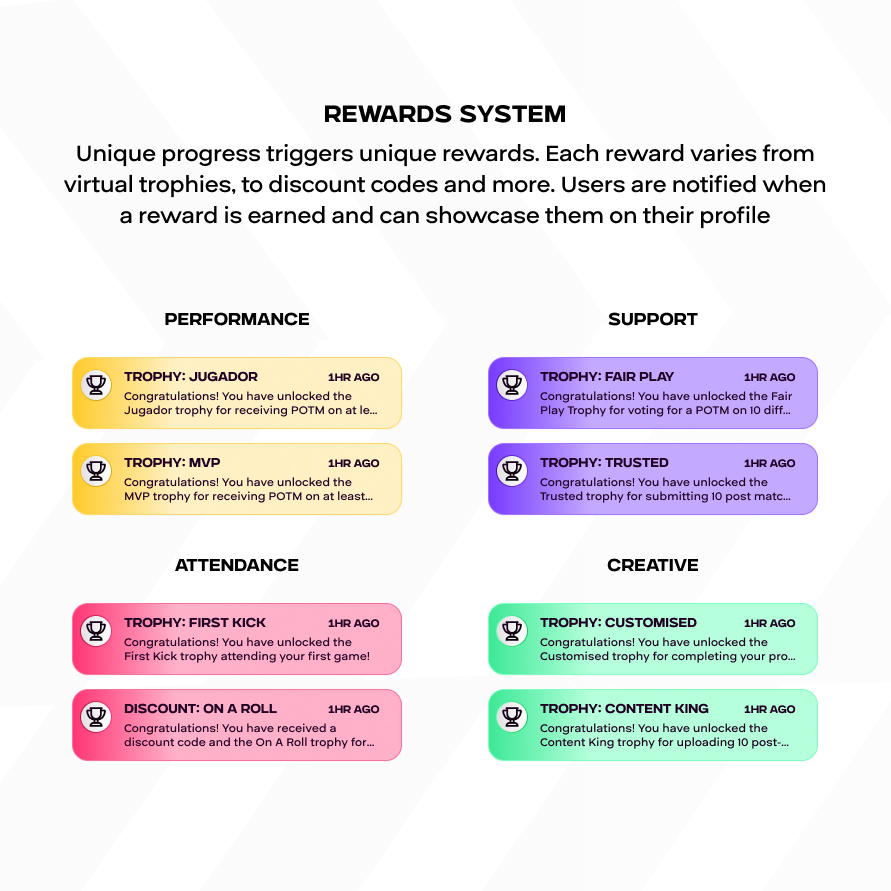
With these foundational archetypes, I conceptualised a framework based on four dynamic motivators, measured across the app as part of a gamified mechanics system. These motivators were Performance, Attendance, Support, and Creativity, and tracked users' game performance (at football matches), the frequency with which they attend matches, how often they interact with other app members, and the content they contribute to the platform. From this, my first conceptual feature for the platform was a gauge that tracked user progress across these four metrics, tied to a rewards system to keep users motivated to progress through the app in their own unique way.
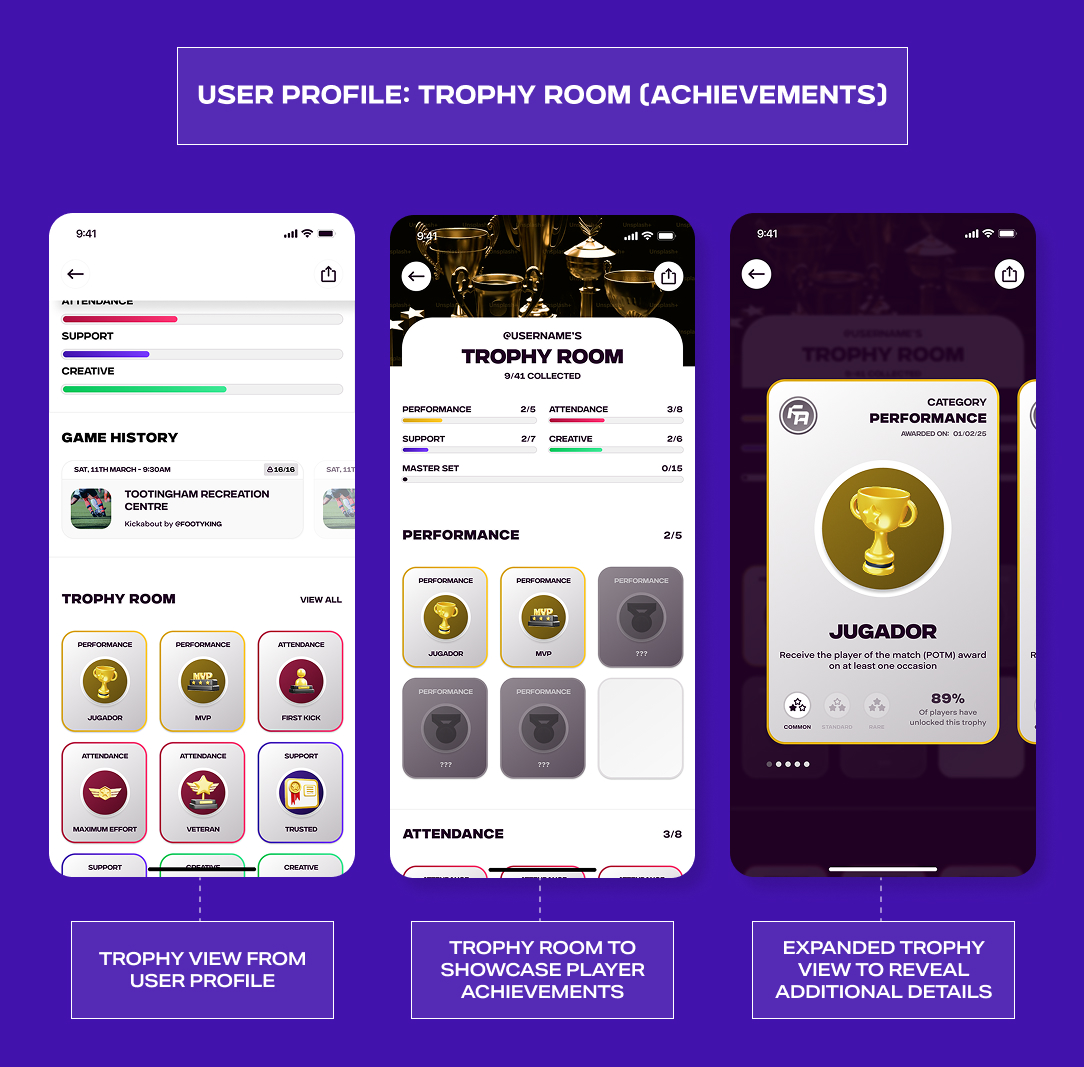
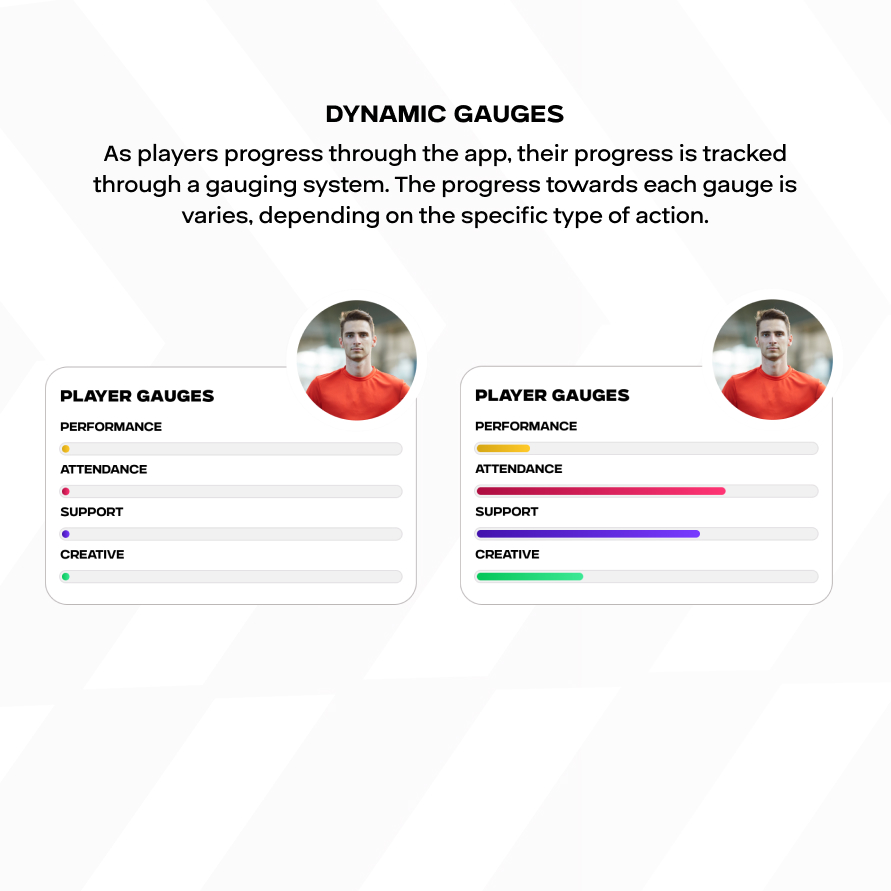
Rewards systems are foundational to gamification strategies, so, with the dynamic motivators set, I conceptualised a progress gauge based on the four categories (Performance, Attendance, Support, and Creativity) to track user behaviour across in-app objectives. Behaviours such as attending games or being voted as a Player of the Match would trigger progression through these gauges, unlocking in-game rewards like digital trophies and match discount codes. Rewards aside, the main benefit of the gauges is that player profiles feel like a unique expression of themselves, bringing a new dimension to the app and to how users interact with each other.
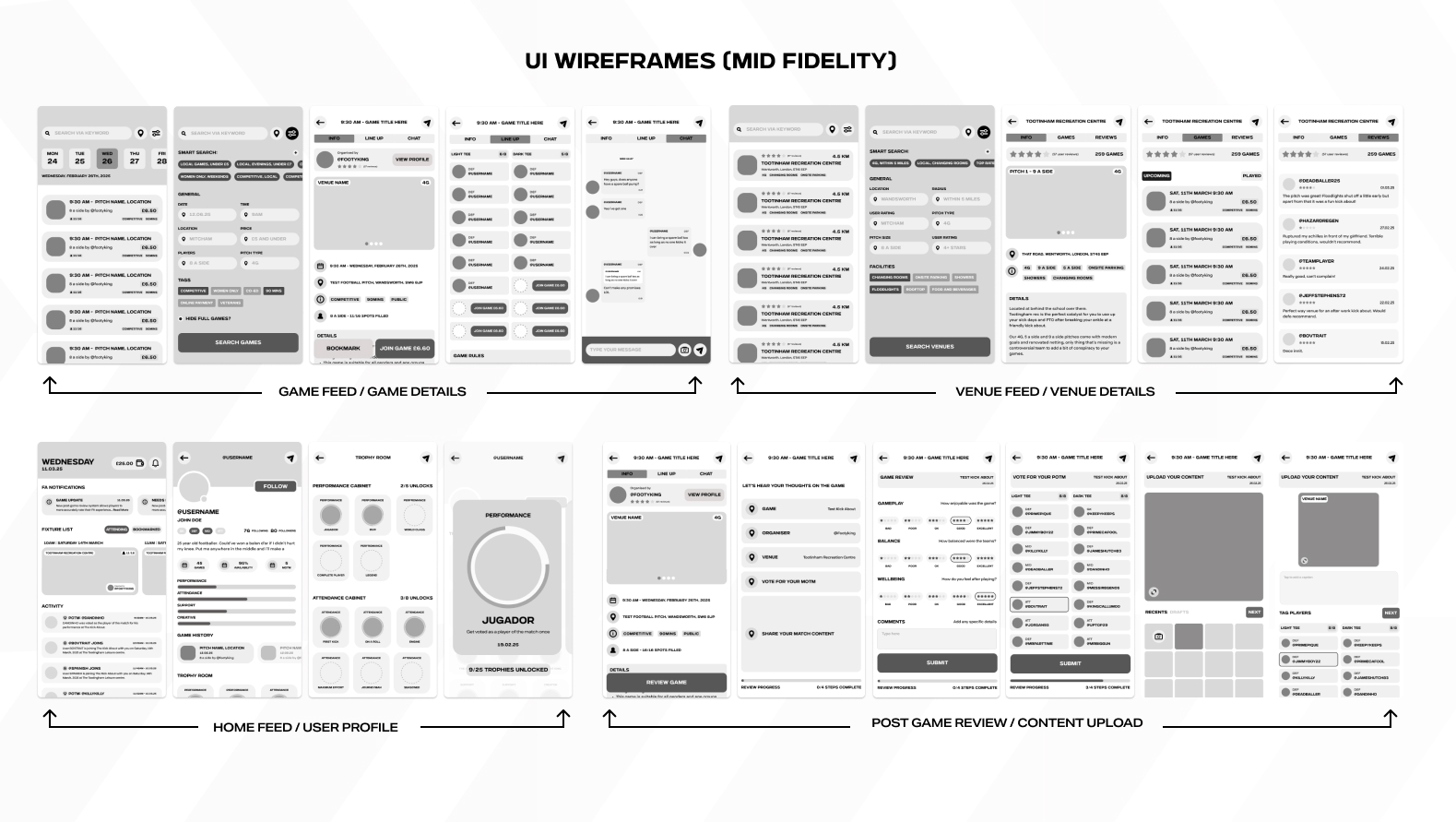
With the key features of the gamification system established, I had to plan how to visualise them in the mobile app's UI. To begin this process, I created a set of medium-fidelity wireframes that mapped the key features and structure of each page. Paying close attention to how users navigate across pages, I had to ensure the new design streamlined key user journeys, avoiding visual clutter and overly complex elements that obstructed user goals.
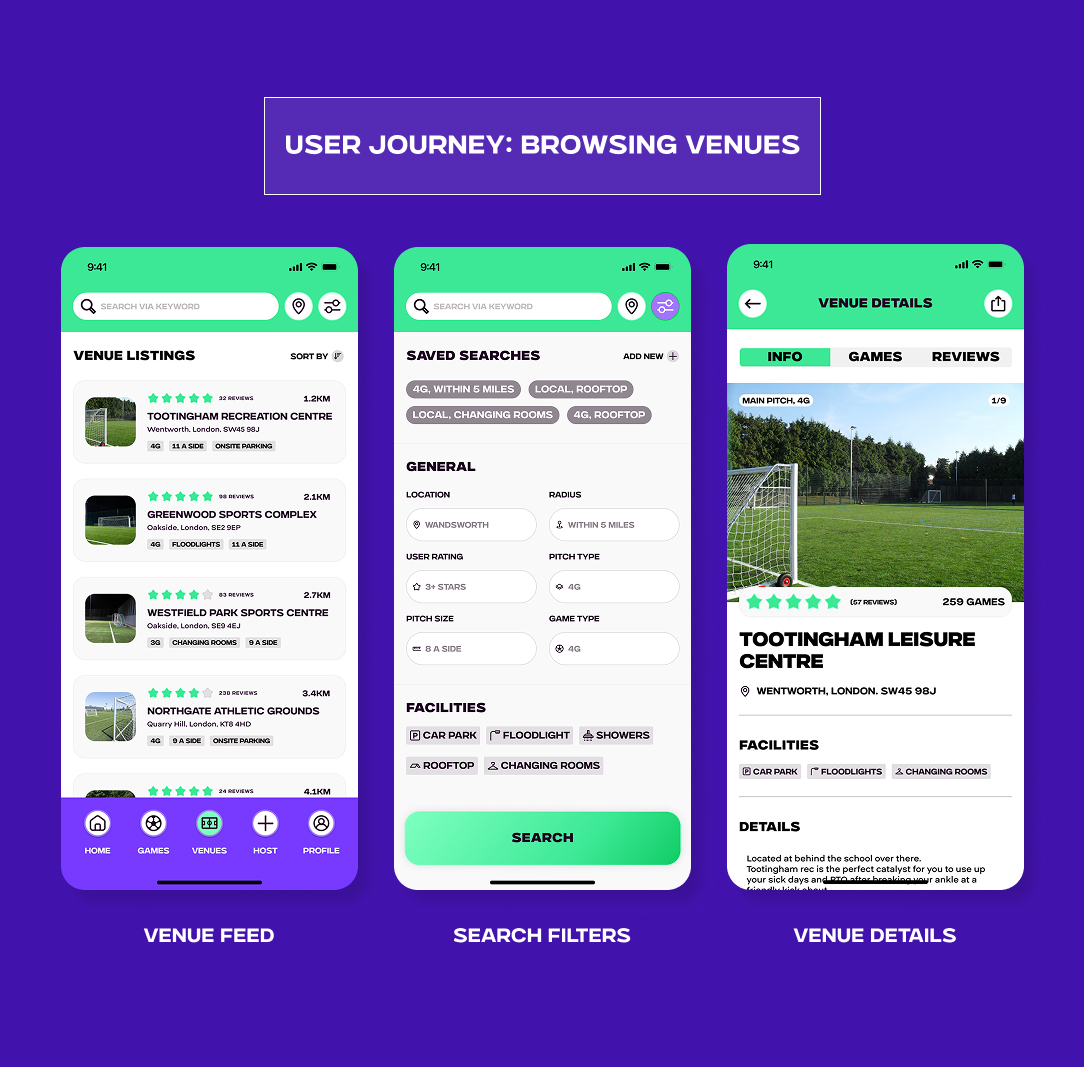
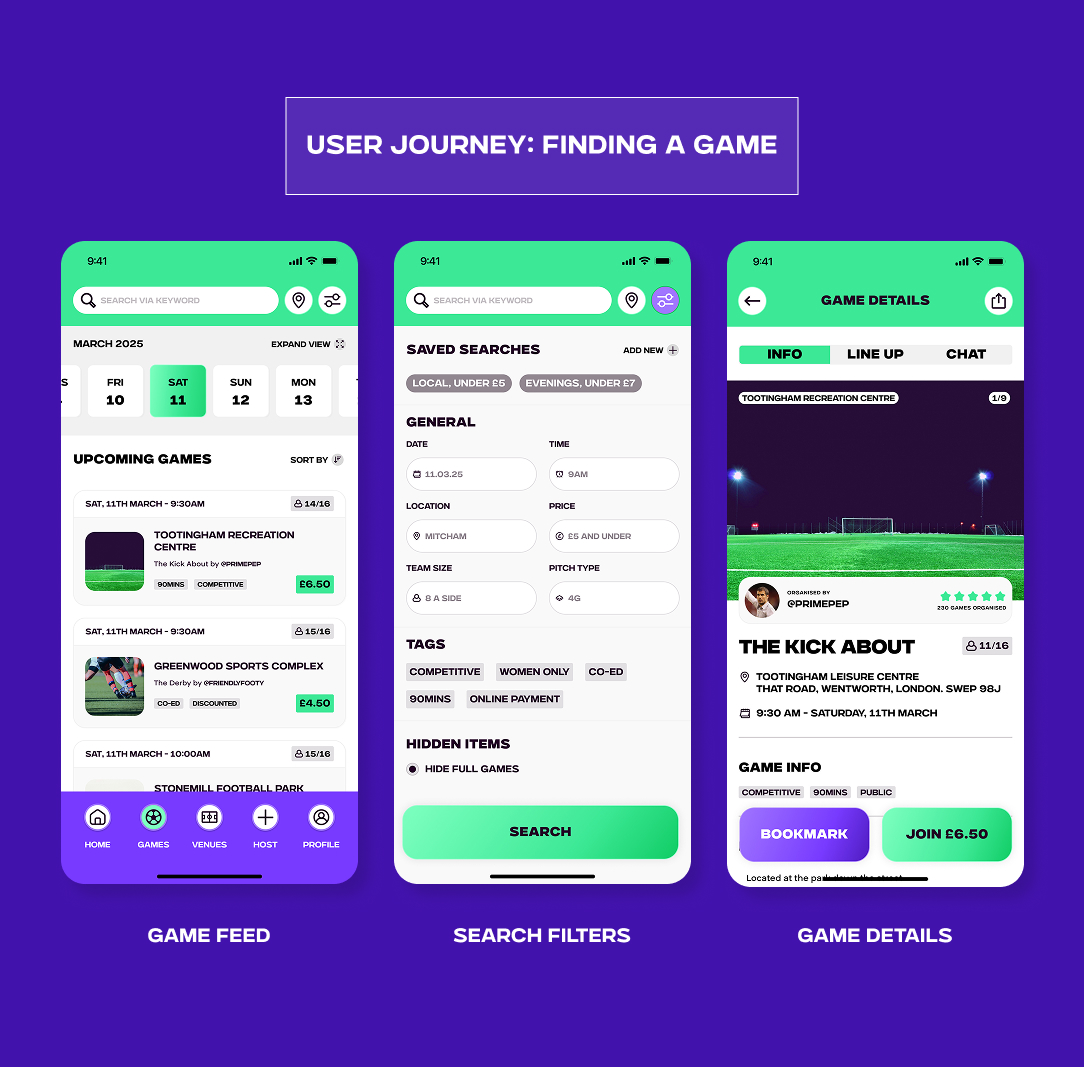
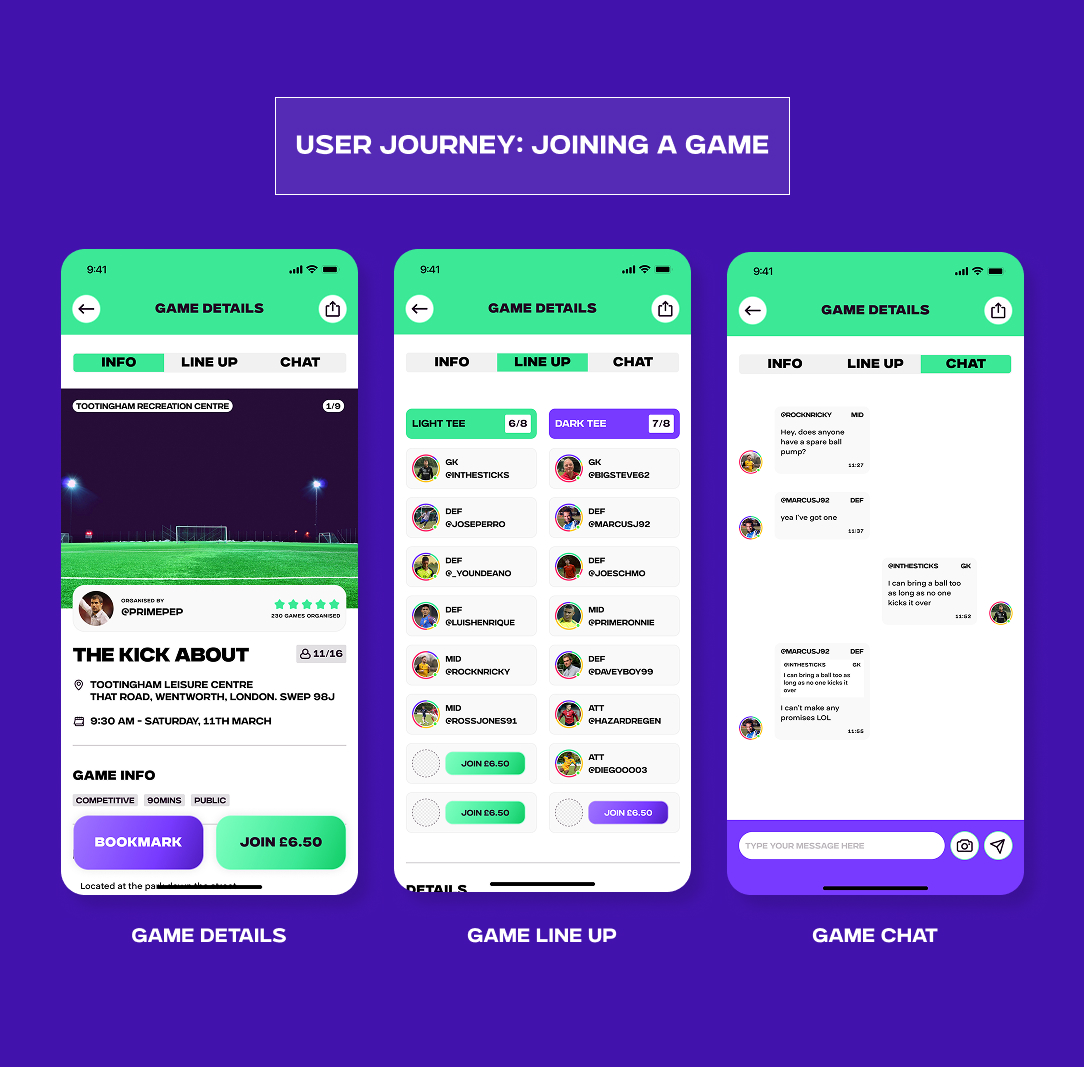
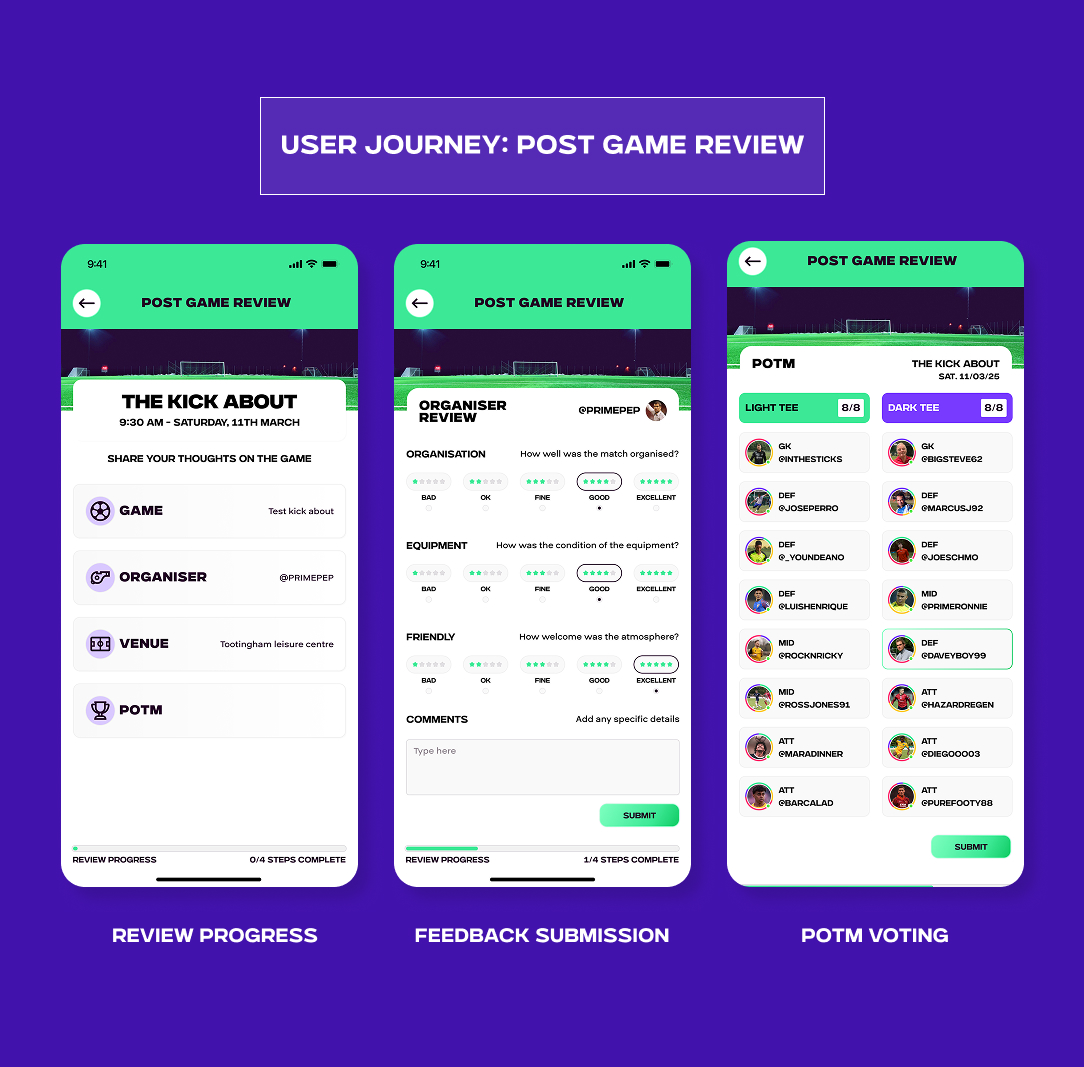
The wireframes highlighted the four specific journeys that were imperative to the platform's core functions: browsing/booking games, browsing footballing venue information, accessing content and updates in the home feed and reviewing matches post-game.
Having established foundational research on the Footy Addicts branding, gamification, and UI, the final step was to begin producing high-fidelity concepts to showcase how a redesign would look in a final product.
I began with revamping the brand aesthetic. Noticing the limitations of the current Footy Addicts assets, I wanted to create a visual system that was more striking, to match the dynamism and intensity of grassroots football. I moved away from the simple flat logo design they had and created a badge featuring the “FA” acronym, adding further dimension with a vibrant dual-colour palette.
To test the flexibility of the new brand direction, I created high-fidelity mock-ups and marketing assets based on the materials and merchandise they currently use to promote their brand.
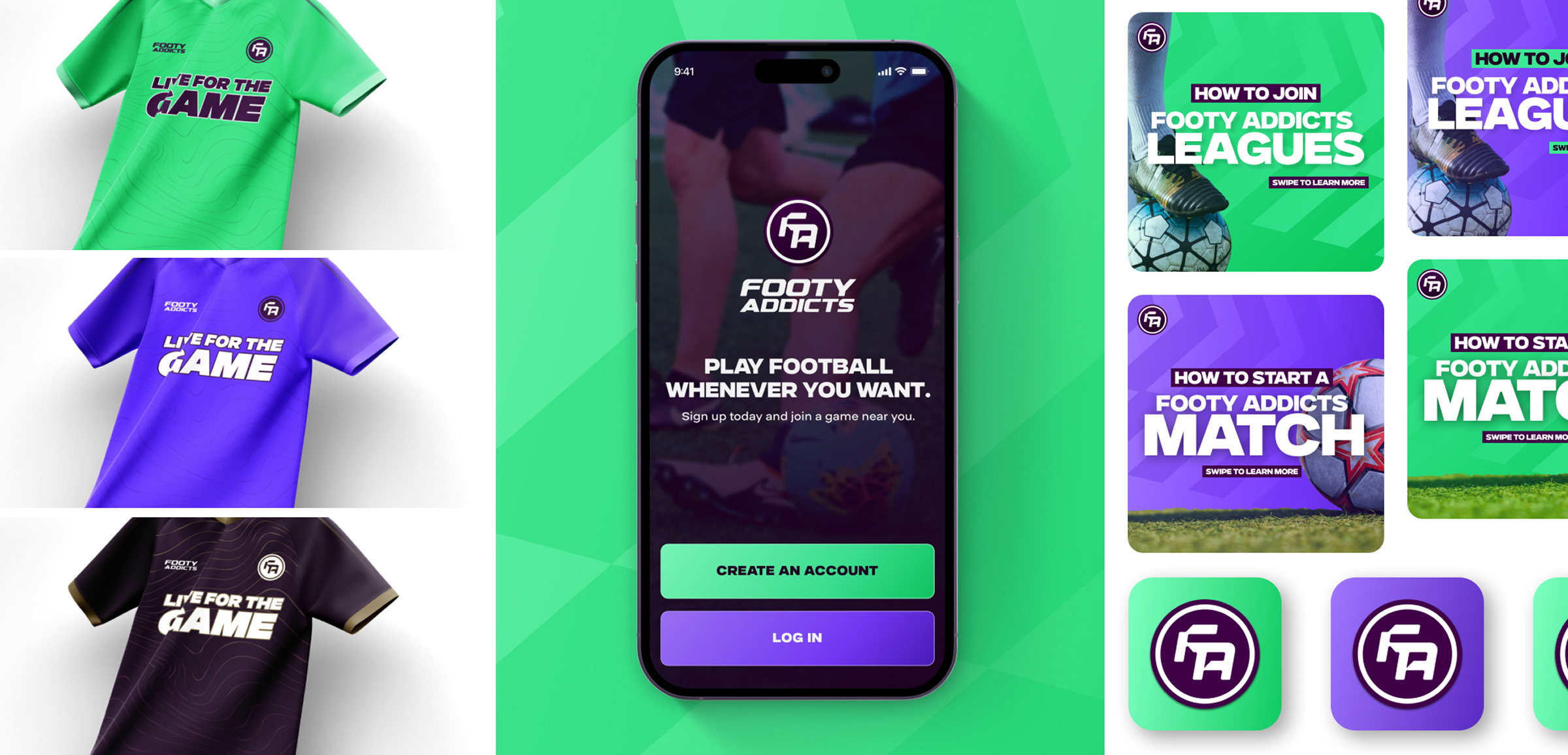


I used the proposed visual system to redesign the mobile UI. I wanted to use the vibrance to lift key CTAs and functions in the app, modernising the experience not just visually but also from an accessibility standpoint.
Core user journeys were reimagined, with the primary goals of searching for, booking, and reviewing games on the Footy Addicts platform paramount. Features that facilitated key user journeys, such as search feeds, search filters, and content listings, were reworked to maximise usability whilst maintaining engagement.
The most experimental feature of the redesign, the gamification system, was front and centre of my design thinking. From a practical standpoint, my intention was for it to blend seamlessly into the platform, with an intuitive design that allows users to understand and engage with the mechanics without friction. I received positive feedback when presenting the redesign to small focus groups of app users, so there was a reassurance that the inclusion of gamified features is welcome; however, being limited to a concept project, without development, prototyping and trialling the product in a live market, the success of the project is mainly limited to assumption.